
How to rank app growth without favoring the largest apps
A revenue ranking naturally favors large apps, while a percentage ranking can favor tiny baselines. A useful growth review needs both scale and rate.
AdMate helps place the signals in one workspace, but the original provider remains authoritative for permissions, definitions and finalized financial records.

All your revenue in one dashboard
Track AdMob, AdSense, RevenueCat and App Store Connect across multiple accounts with filters by app, platform and country
Monitor revenue, clicks, eCPM, subscriptions, installs and payments on iPhone, iPad, Mac and Apple Watch
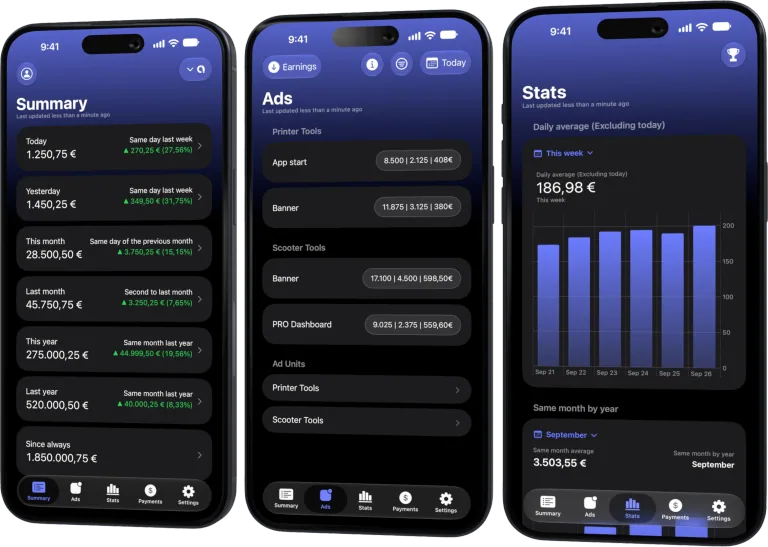
Calculate absolute and relative change
Absolute change shows business impact. Percentage change shows speed. Place them side by side instead of choosing only one, and state the comparison period.
Set a minimum baseline
Require a sensible amount of prior revenue, users or days before calling something a growth leader. Moving from one dollar to four is 300 percent growth but may not be strategically important.
Use comparable maturity groups
Compare established apps with established apps and launches with launches. A new app’s ramp should not automatically outrank a stable product improving from a large base.
Inspect the source of growth
Break the leading change into ads, subscriptions, country and platform. Growth concentrated in one delayed report or one unusual transaction deserves a different response from broad improvement.
Review checklist
- Use equal-length complete periods.
- Show amount and percentage together.
- Apply a documented baseline threshold.
- Review concentration behind the rank.
Frequently asked questions
Which ranking should lead the dashboard?
Use absolute change for impact and percentage for discovery; neither is sufficient alone.
How do I handle a zero baseline?
Label it as new activity instead of an infinite growth percentage.
Should I rank daily?
Weekly or monthly rankings usually reduce noise, while daily views can flag candidates to review.
All your revenue in one dashboard
Track AdMob, AdSense, RevenueCat and App Store Connect across multiple accounts with filters by app, platform and country
Monitor revenue, clicks, eCPM, subscriptions, installs and payments on iPhone, iPad, Mac and Apple Watch
| FixoLab
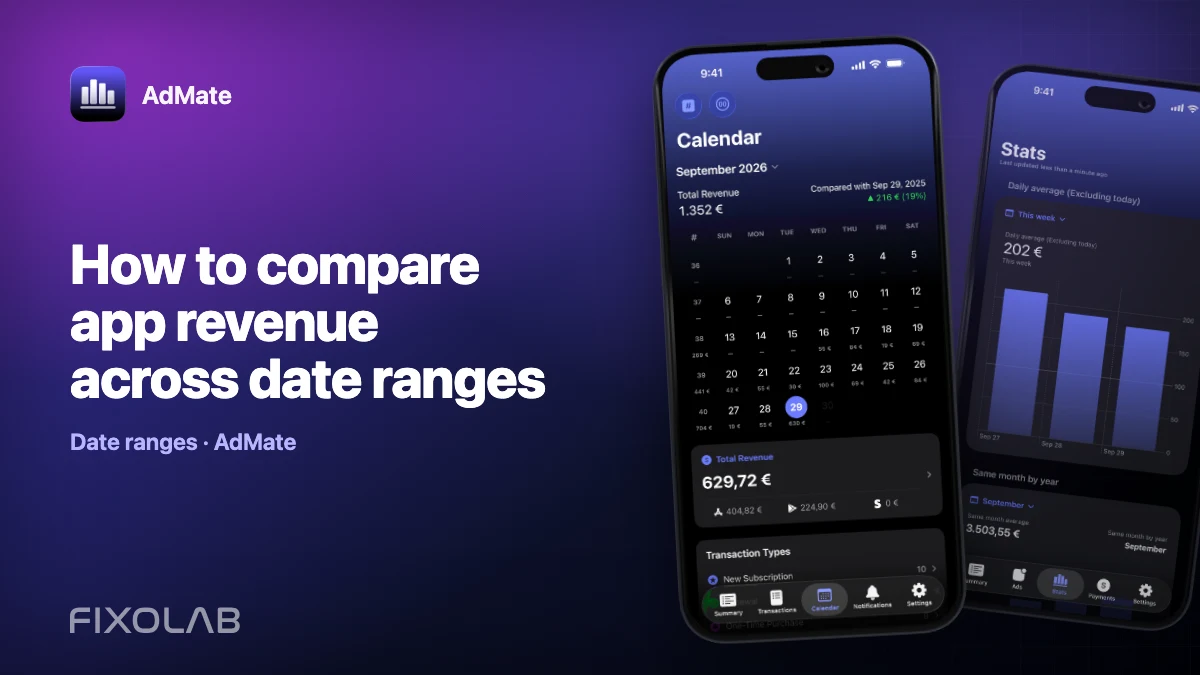
How to compare app revenue across date ranges
Build fair daily, weekly and monthly revenue comparisons in AdMate by aligning duration, account scope, app filters, time zones and incomplete periods.
| FixoLab
How to compare iOS and Android monetization in one dashboard
Compare iOS and Android advertising, subscription and store performance in AdMate without mixing incompatible metrics, currencies or overlapping transactions.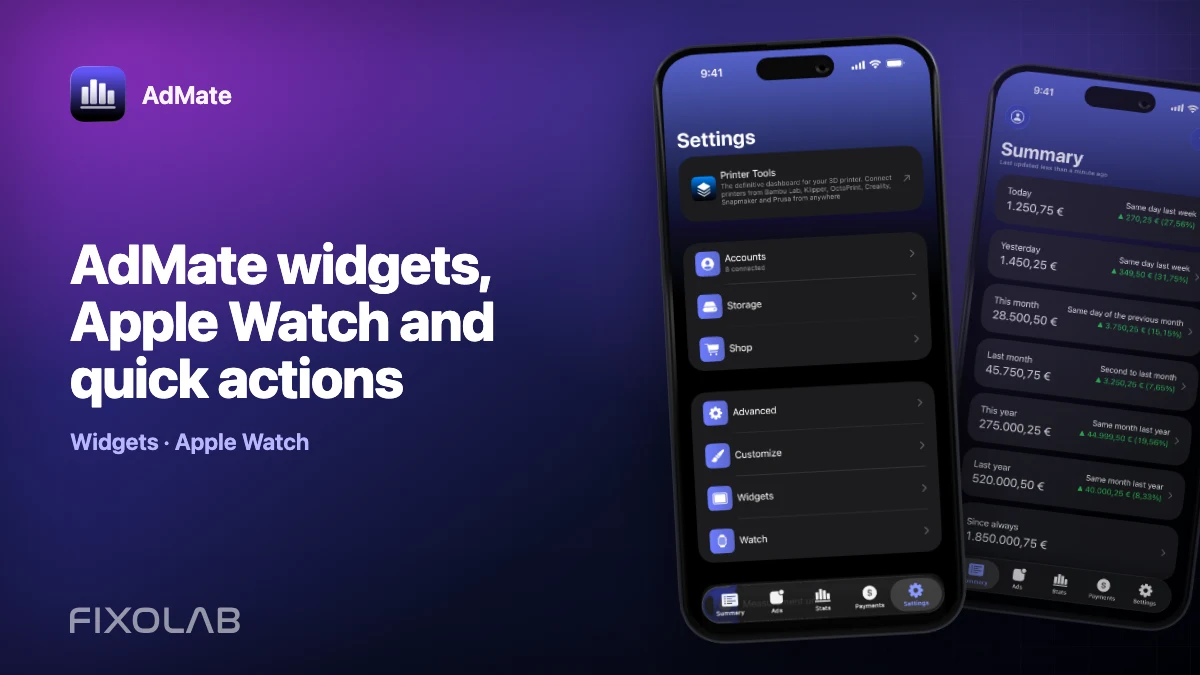
| FixoLab
AdMate widgets, Apple Watch and quick actions
Use AdMate widgets, Apple Watch, complications and quick actions for fast revenue checks while understanding snapshot freshness, account scope and privacy.
| FixoLab
How to analyze App Store Connect reviews and analytics
Combine App Store Connect reviews with analytics breakdowns in AdMate while preserving app, country, version, period and sample-size context.