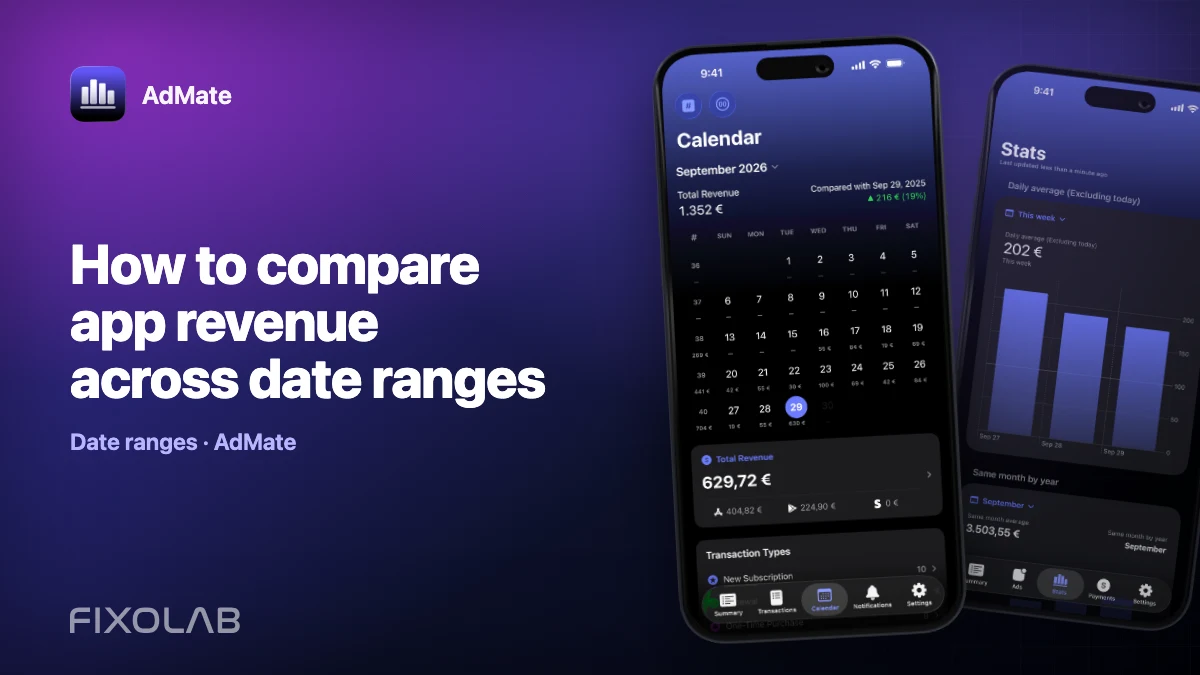
How to compare app revenue across date ranges
A comparison can be mathematically correct and still misleading. “This month versus last month” is unfair when the current month has only ten completed days. “Today versus yesterday” is unstable when today is still open. AdMate makes periods easy to switch, but the analyst still has to choose comparable windows.
Use the following method for advertising, subscriptions and store metrics.
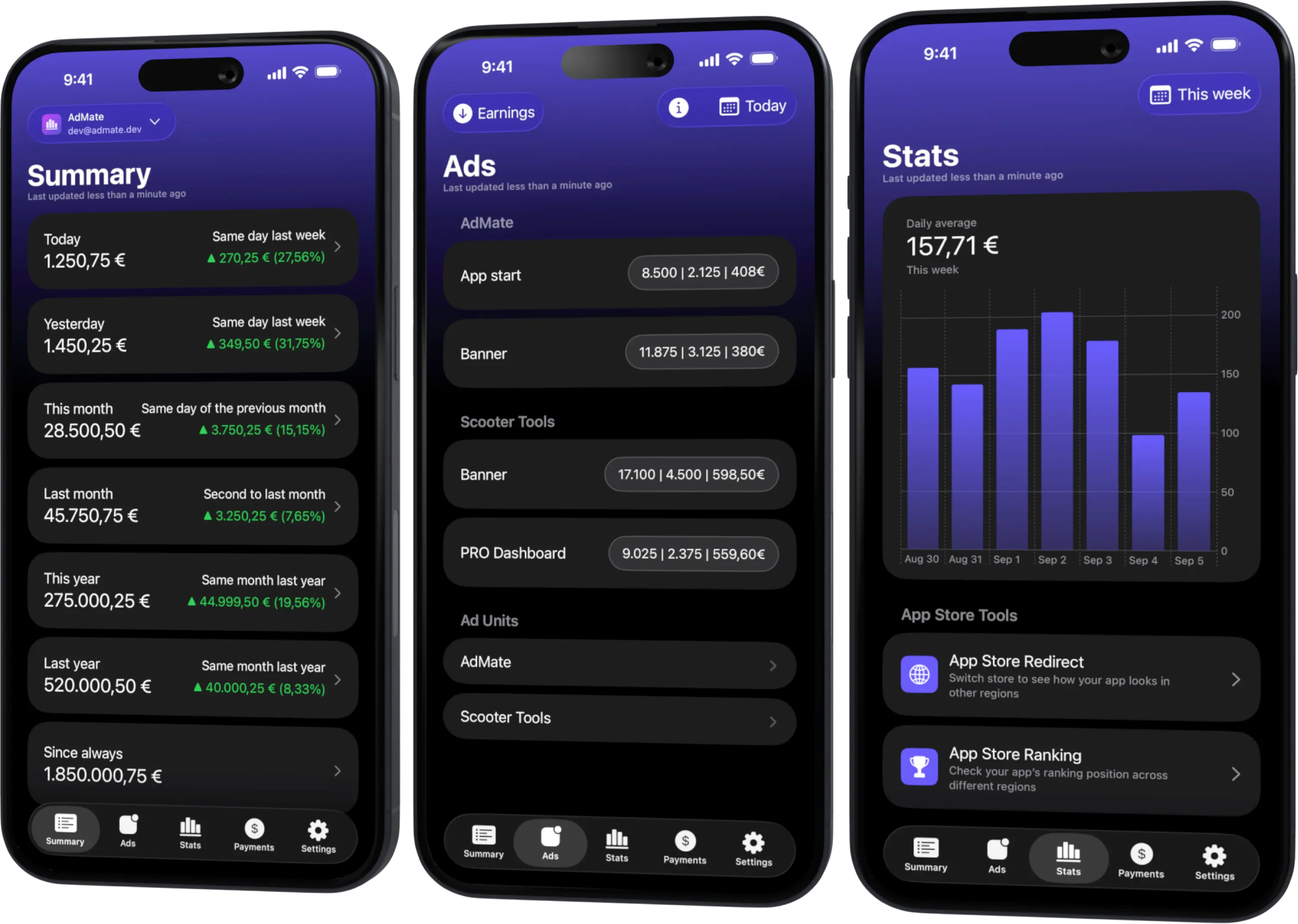
All your revenue in one dashboard
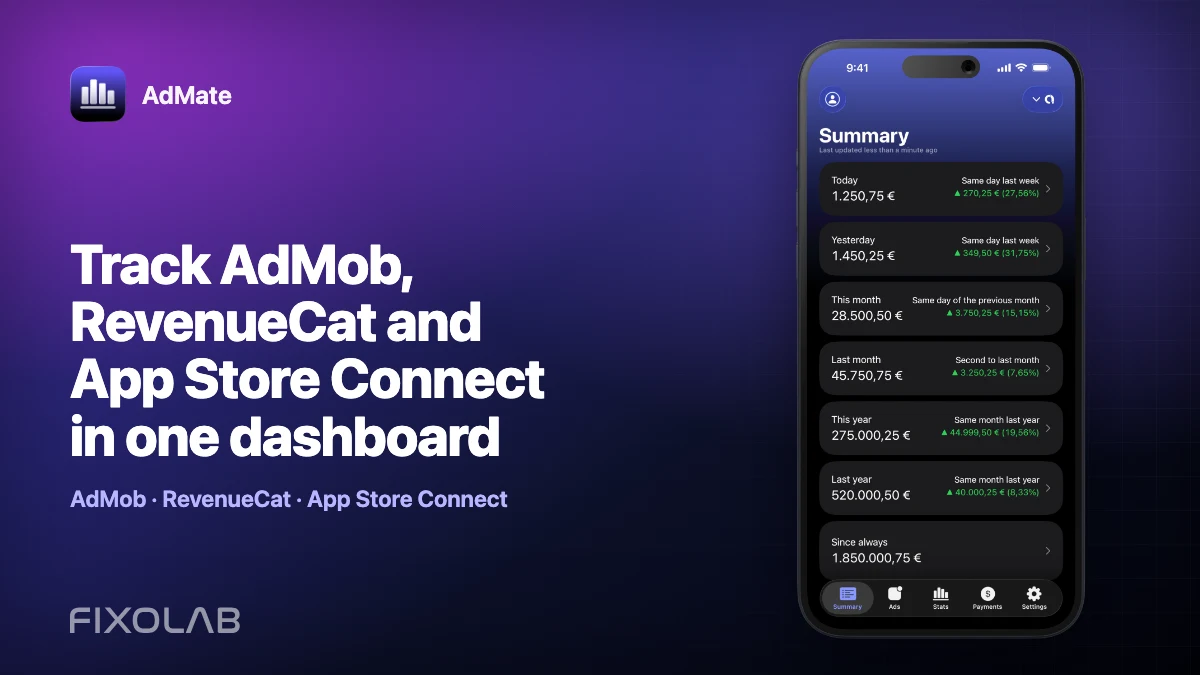
Track AdMob, AdSense, RevenueCat and App Store Connect across multiple accounts with filters by app, platform and country
Monitor revenue, clicks, eCPM, subscriptions, installs and payments on iPhone, iPad, Mac and Apple Watch
Start with the decision
Choose the question before the dates:
- Is daily performance unusual?
- Is the current week improving?
- Did a release change monetization?
- Is seasonality affecting the month?
- Did one app drive the portfolio change?
The question determines the useful granularity and comparison. A release analysis may need matched days before and after release; a monthly accounting review needs closed provider periods.
Compare equal exposure
Prefer equal-length complete ranges:
- previous completed day versus the day before;
- Monday–Sunday versus the previous Monday–Sunday;
- first 15 completed days of this month versus the first 15 of last month;
- closed month versus the previous closed month.
When weekdays matter, compare the same weekday mix. Weekend usage can make a seven-day range more representative than a single day.
Keep scope fixed
Before reading the percentage change, confirm:
- provider account;
- app or project;
- store and platform;
- country or territory filters;
- product or ad-unit filters;
- currency;
- metric definition.
A portfolio comparison can change because a new app entered the total, even when every existing app was flat. Note scope changes explicitly.
Handle the current day
The current day is incomplete and can contain provider lag. Either exclude it or compare the same elapsed hours using a provider that supports that granularity. Do not compare 10:00 today with the full previous day and publish the percentage as a daily decline.
For executive summaries, complete days are usually clearer and more repeatable.
Time zones
Providers may assign events to dates using different zones. For within-provider comparison, keep that provider’s boundaries. For cross-provider analysis, document the zones and prefer longer complete periods that reduce midnight noise.
Do not silently shift transactions between days to make two charts match.
Read change as amount and percentage
A move from 1 to 2 is a 100% increase but only one unit. A move from 10,000 to 10,500 is 5% but may be more important to the business.
Record both:
- absolute change = current minus comparison;
- percentage change = absolute change divided by comparison, when the comparison is non-zero.
If the baseline is zero, report the absolute result rather than an infinite or undefined percentage.
Decompose the result
After finding a meaningful change, open the breakdown that can explain it:
- app and ad unit for AdMob;
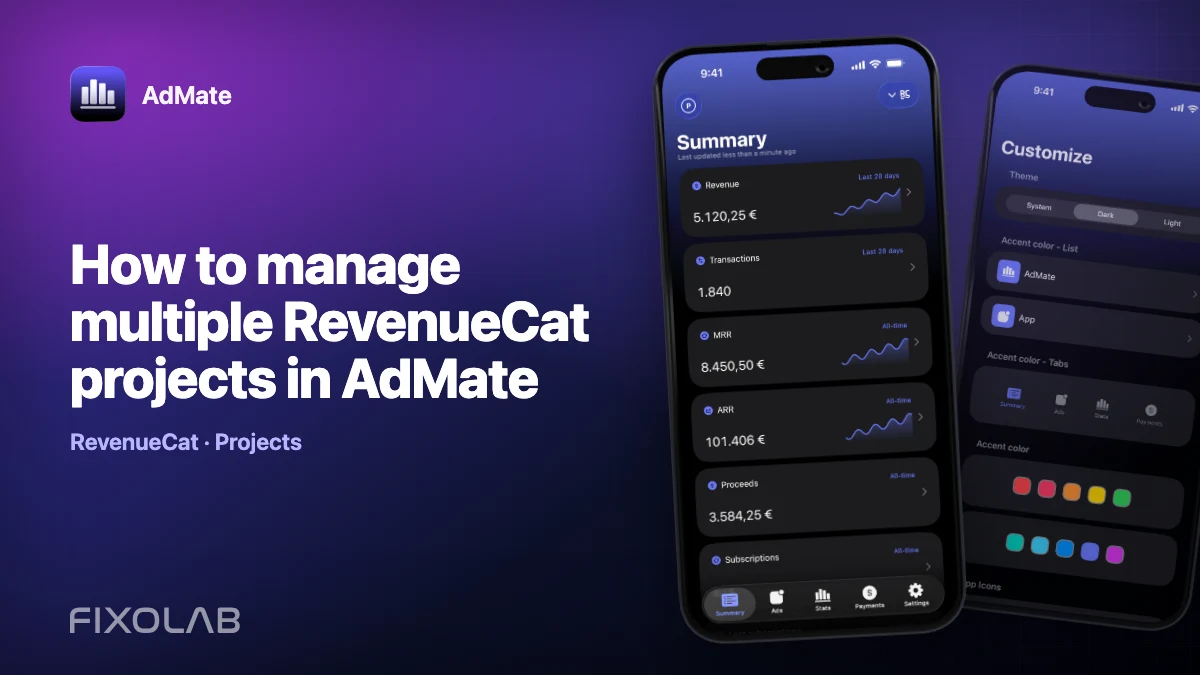
- project, product and store for RevenueCat;
- app, territory, product or transaction type for App Store Connect;
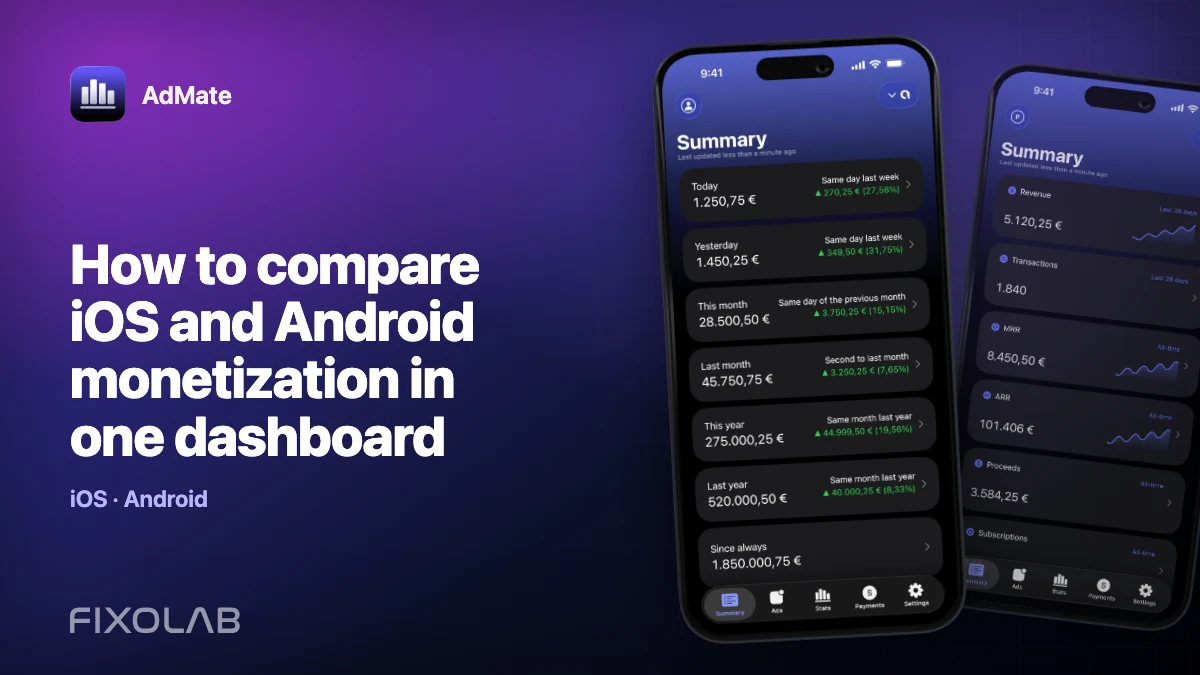
- platform or account for a combined portfolio.
The headline tells you where to look; the breakdown tells you what moved.
A repeatable AdMate workflow
- Refresh the main app.
- Select one provider and metric.
- Choose a complete primary period.
- Choose an equal comparison period.
- Verify account, app, currency and filters.
- Record amount and percentage change.
- Open the largest contributing breakdown.
- Repeat for a second provider only after matching scope.
- Save finalized provider reports for decisions that require audit evidence.
For terminology, use gross, estimated and net revenue explained.
Frequently asked questions
Is month-to-date versus last full month valid?
It answers a limited question but is not an equal comparison. Prefer month-to-date versus the same number of days last month.
What if the previous period is zero?
Report the current amount and absolute change. A percentage is undefined or misleading.
Should I include today?
Usually not for a stable summary. Today’s provider data is incomplete and can still be revised.
Can I compare AdMob earnings with App Store proceeds?
You can compare trends, but retain their definitions and do not imply they are the same kind of metric.
All your revenue in one dashboard
Track AdMob, AdSense, RevenueCat and App Store Connect across multiple accounts with filters by app, platform and country
Monitor revenue, clicks, eCPM, subscriptions, installs and payments on iPhone, iPad, Mac and Apple Watch