How to compare iOS and Android monetization in one dashboard
A cross-platform app can earn through ads, subscriptions and one-time purchases, but iOS and Android rarely expose identical reports. A fair comparison does not force every provider into one artificial metric. It aligns app identity, period and business question, then keeps each source definition visible.
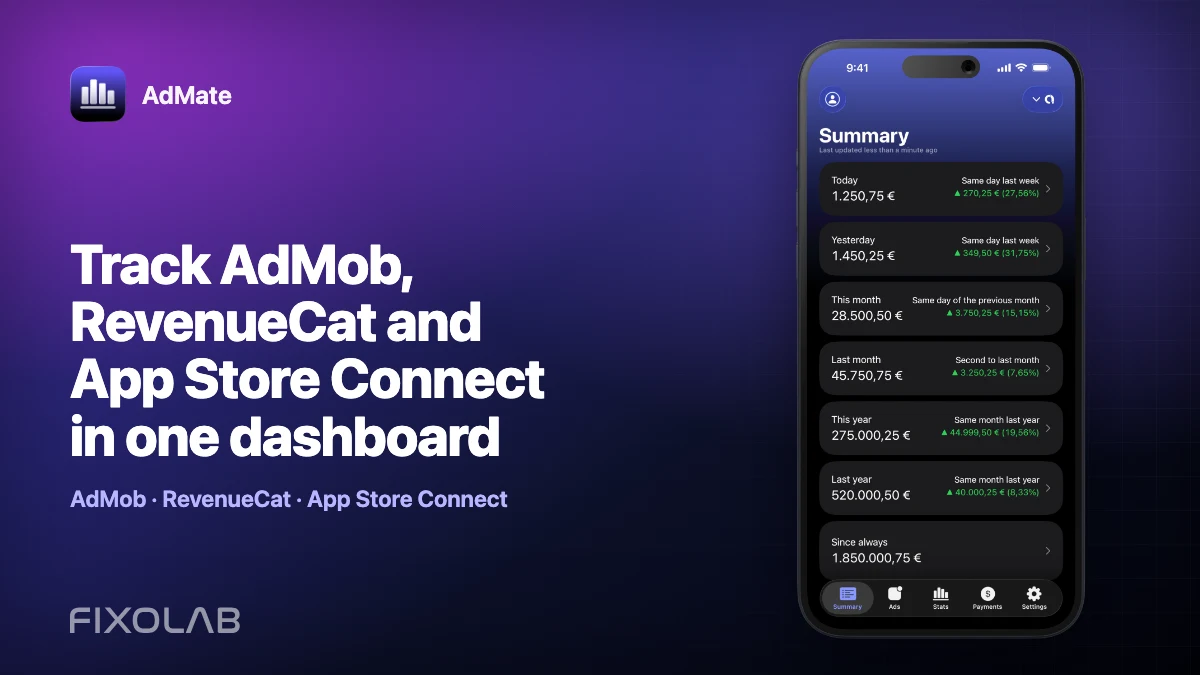
AdMate can place AdMob, RevenueCat, App Store Connect and compatible Google Play data close together. Use that proximity to investigate—not to erase platform differences.
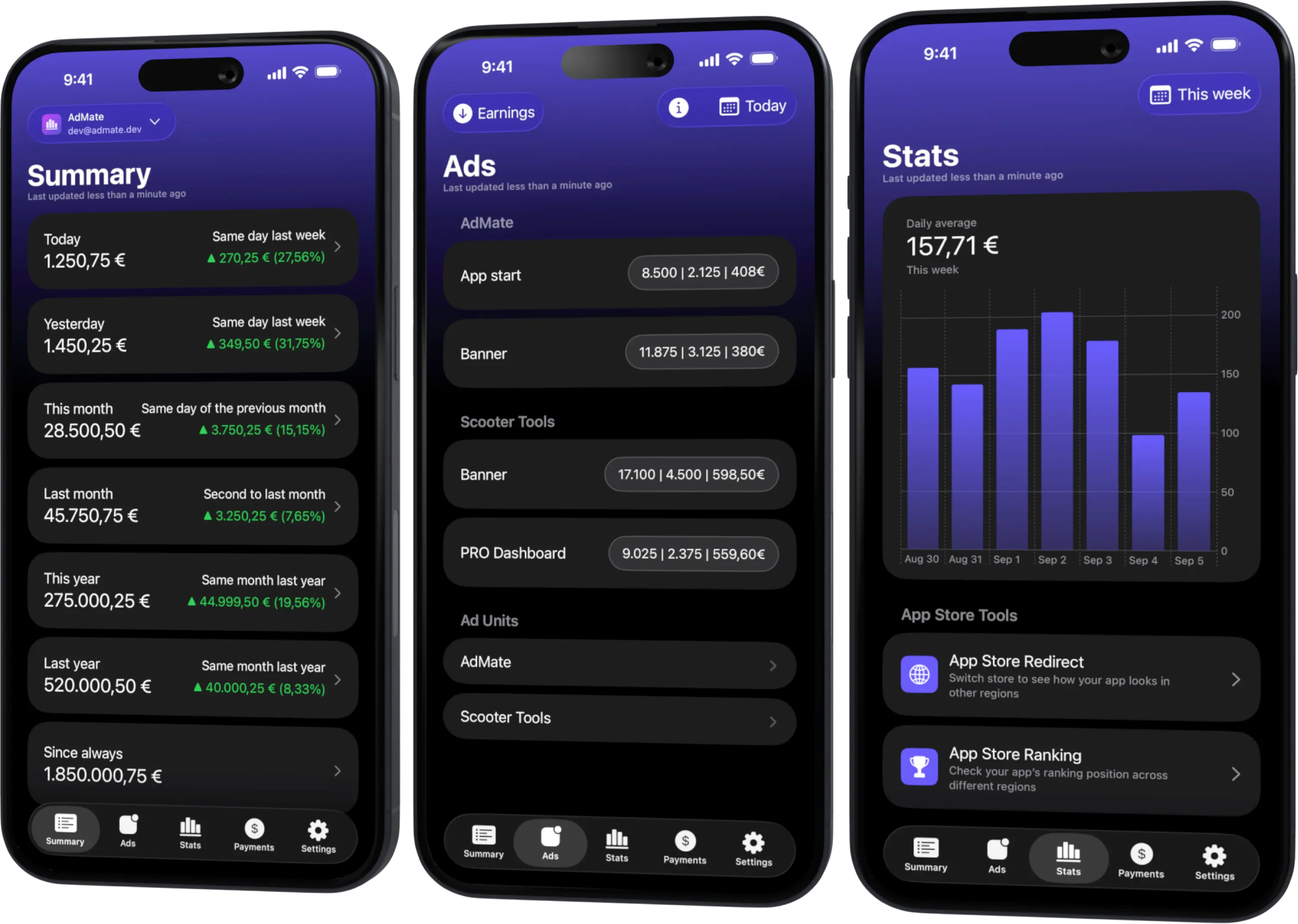
All your revenue in one dashboard
Track AdMob, AdSense, RevenueCat and App Store Connect across multiple accounts with filters by app, platform and country
Monitor revenue, clicks, eCPM, subscriptions, installs and payments on iPhone, iPad, Mac and Apple Watch
Decide what you are comparing
Choose one question:
- Which platform generated more advertising activity?
- Which platform produced more subscription transactions?
- Where did developer proceeds grow faster?
- Did a release change usage and monetization differently by platform?
Advertising earnings, subscription revenue, customer sales and proceeds are not interchangeable. Use parallel lines rather than a single total until you have defined a common business measure.
Match the same app
Display names can differ across stores. Match the iOS bundle identifier, Android package name and RevenueCat project mapping to the correct product. If a RevenueCat project contains several apps, filter before comparing it with one App Store Connect app.
Document whether the comparison covers one app, a brand or the full portfolio.
Align periods and currencies
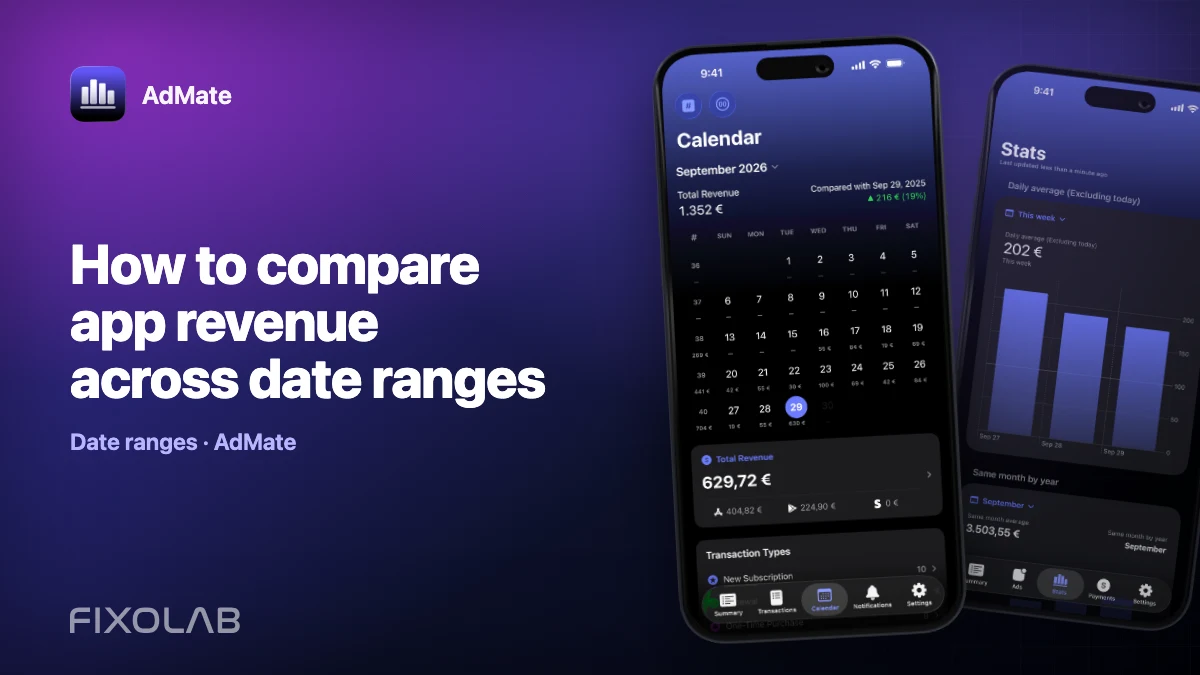
Use equal-length completed periods and note provider time zones. For currency:
- preserve the original provider currency;
- choose a reporting currency only when needed;
- document the conversion source and date;
- avoid mixing converted operational estimates with final bank amounts.
A small apparent platform difference can be only a currency or day-boundary effect.
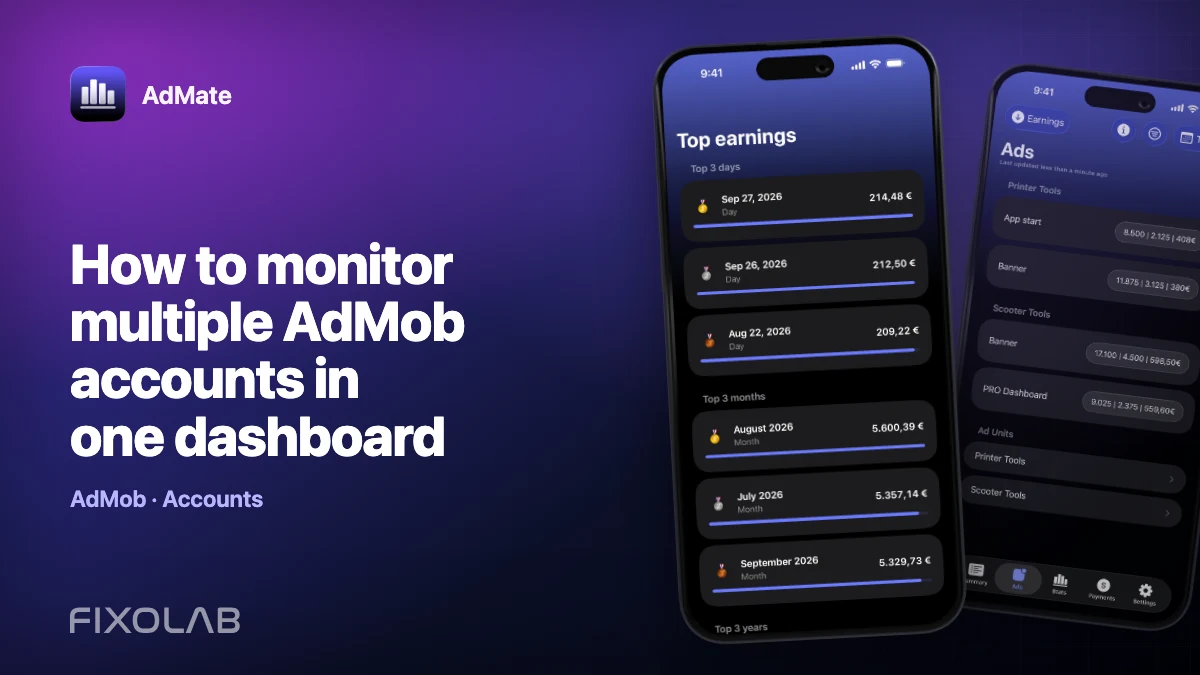
Compare advertising
When both platforms use AdMob, compare the same metrics:
- estimated earnings;
- impressions and ad requests;
- eCPM and match rate;
- app and ad-format mix;
- country distribution.
Do not conclude that the platform caused a higher eCPM without checking geography, format, consent and audience composition.
Compare subscriptions and purchases
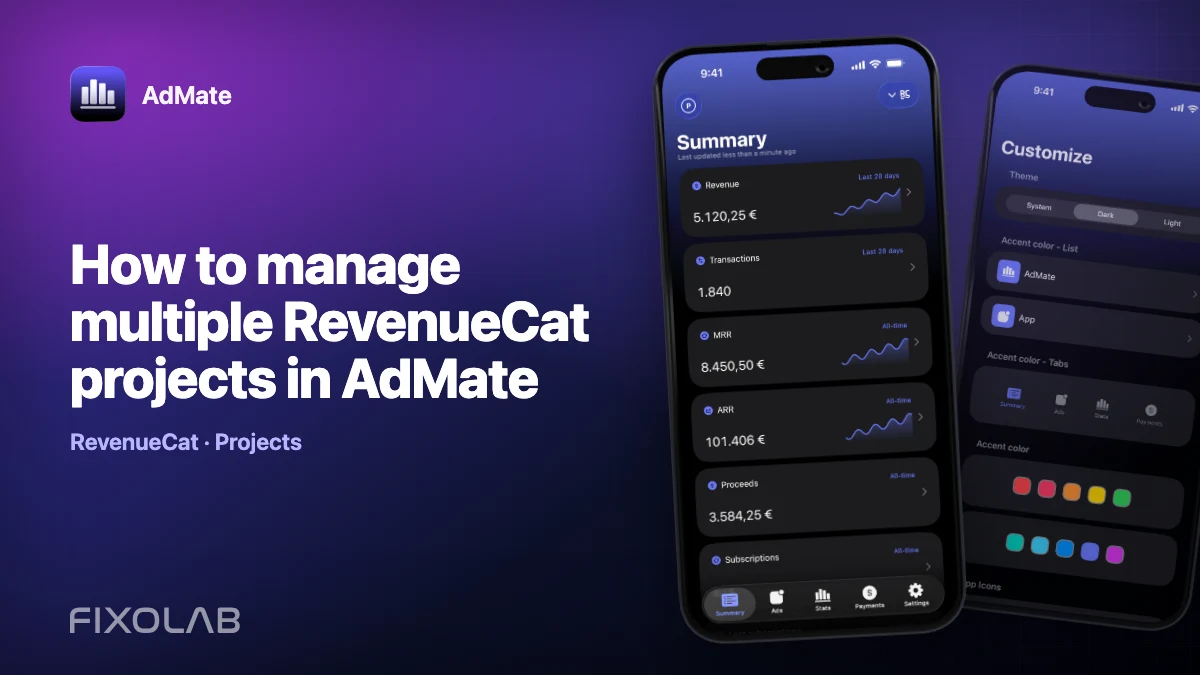
RevenueCat can provide a consistent project view across configured stores, while App Store Connect and Google Play remain authoritative for their own reports.
For a platform split:
- filter RevenueCat by store when possible;
- compare transactions, refunds and the same revenue definition;
- use store proceeds for a net-store perspective;
- avoid adding RevenueCat and store totals for the same purchases.
Build a platform scorecard
Use rows such as:
| Question | iOS source | Android source |
|---|---|---|
| Ad performance | AdMob iOS app | AdMob Android app |
| Subscription trend | RevenueCat App Store filter | RevenueCat Play Store filter |
| Store sales/proceeds | App Store Connect | Google Play reports when available |
| Product context | App Store analytics | Analytics/Play reports when available |
The table makes missing or gated data explicit instead of replacing it with zero.
Interpret differences carefully
Higher iOS proceeds can coexist with higher Android ad impressions. One platform can have more users while the other has stronger purchase conversion. Treat the result as a portfolio allocation question, not a contest with one universal winner.
Open the app, country, product and format breakdowns that explain the headline. Compare several complete periods before changing pricing or ad placement.
Frequently asked questions
Can I create one iOS plus Android revenue total?
Yes, after choosing non-overlapping sources, aligning currency and documenting whether the values are estimated, gross or net.
Is RevenueCat enough for the comparison?
It is useful for cross-store subscription analytics, but store financial reports remain necessary for finalized proceeds and payments.
Why is Google Play missing from my build?
Current AdMate versions may keep Google Play account management behind a feature gate. Do not treat a hidden source as zero revenue.
Should I compare a single day?
Use several complete, matched days unless a specific incident requires finer analysis.
All your revenue in one dashboard
Track AdMob, AdSense, RevenueCat and App Store Connect across multiple accounts with filters by app, platform and country
Monitor revenue, clicks, eCPM, subscriptions, installs and payments on iPhone, iPad, Mac and Apple Watch